We remain fully operational. Our teams are working around the clock to ensure your deliveries continue safely.

DOWNLOAD THE APP


Copyright © 2025 Desertcart Holdings Limited
DOWNLOAD THE APP


Buy anything from 5,000+ international stores. One checkout price. No surprise fees. Join 2M+ shoppers on Desertcart.
Desertcart purchases this item on your behalf and handles shipping, customs, and support to Burundi.
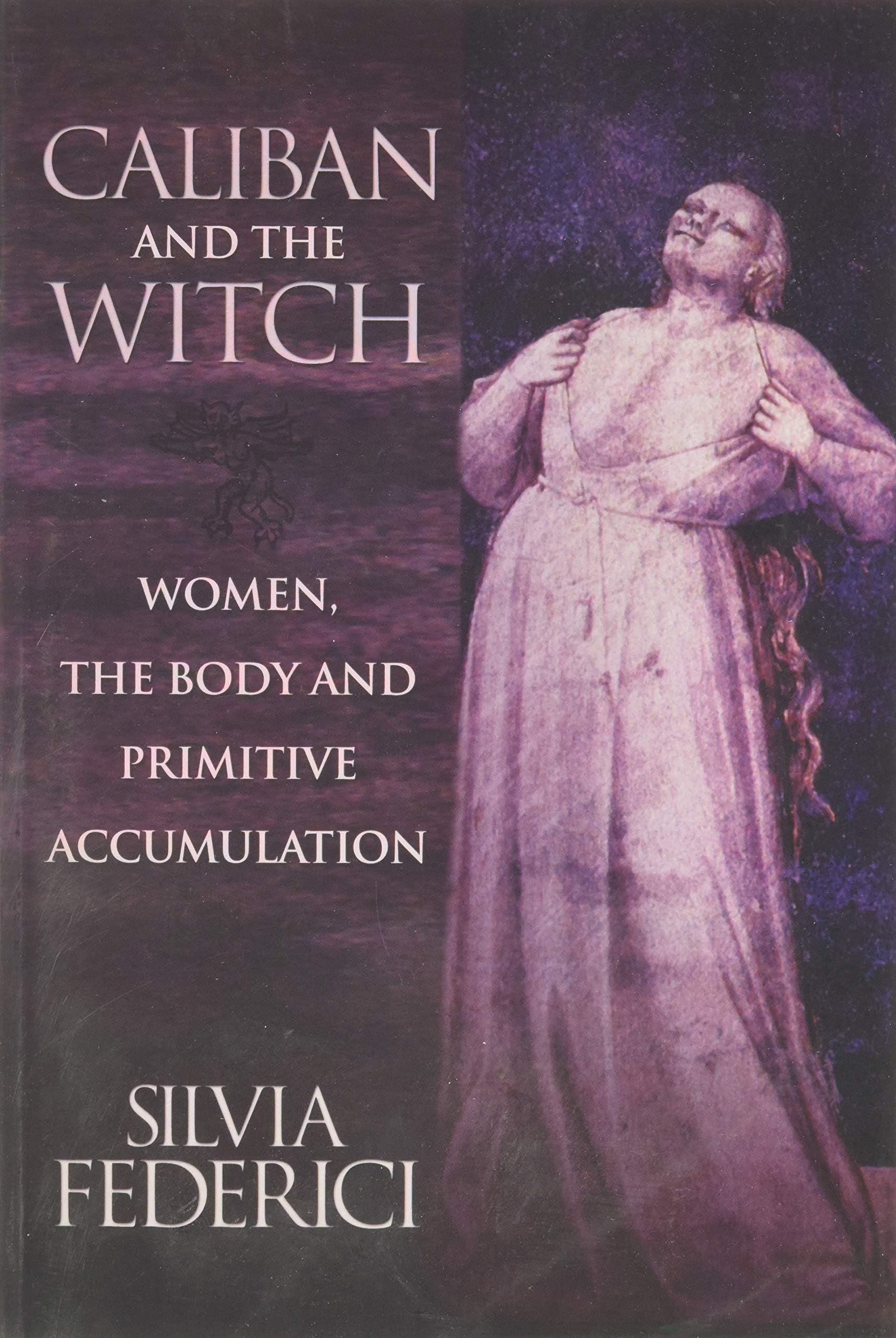
Caliban and the Witch: Women, the Body and Primitive Accumulation [Federici, Silvia] on desertcart.com. *FREE* shipping on qualifying offers. Caliban and the Witch: Women, the Body and Primitive Accumulation Review: Magnificent study of women and original accumulation - Silvia Federici's book "Caliban and the Witch" demonstrates the absolute necessity of women's studies for a thorough and scientific understanding of history. Focusing on the role of women and the body in the process by Marx and Adam Smith described as "original accumulation", i.e. the violent expropriation of the feudal commons in the movement towards a capitalist society, Federici demonstrates that a true war against women was an important part of the ruling class' strategy. The book assesses various aspects of this development, including witchcraft and the witch-hunts, the "Christianization" (or rather Catholization) of the North and South American native civilizations, the role of philosophical mechanism and the developers of the scientific method (Bacon, Descartes, Newton, Hobbes, etc.), and the early slave trade. In each case Federici masterfully shows how this development came to be, what role it played in the process of 'original accumulation', and why it was favored temporarily by the ruling class. She also gives very strong evidence that things like fear of witchcraft, patriarchy, racism etc., often seen as the inevitable and 'natural' results of ignorance and superstition in those societies, were in reality forced onto the common people as part of a top-down campaign to destroy the backbone of the feudal communities. What is an additional interesting contribution of this book is Federici's evidence that there was not only widespread peasant resistance against the process of enclosure, capitalization and expropriation, but more particularly that women often played a very major role in these resistance movements, especially after the German Peasant War ended in a massacre. Many of the women who would later be burned and persecuted as witches were likely survivors of these resistance movements and therefore both had strong connections with local farming communities and resentment against authority, a dangerous combination for the ruling classes. To me it was also remarkable new information to learn about how common female wage-labor in the cities was in the late Middle Ages and early Renaissance, as well as the degree of acceptance of sexuality and magic. Of course we should not in any way try to paint too rosy a picture of the late feudal era, which everyone knows had enough terror and tyranny of its own, but Federici shows that even then there was a strong current of people resisting both (proto-)capitalism and its predecessor. In her historical panorama, Federici adresses many other writers on women and the body and their subjugation, in particular the feminists, Marx, Foucault and such people as Le Roy Ladurie and Carlo Ginzburg. In my view Federici overstates her case against Marx a bit; she is correct that the role of the subjugation of women in particular was not much addressed by him, but it certainly was by Engels, and I also think that the insights she shows in this work would have been able to count on Marx' full assent. She also seems to miss the fact that "primitive accumulation" is a mistranslation of Marx' term, so that accusations of Marx missing the fact that such expropriatory violence takes place as part of capitalism even today miss the mark. Stronger is her case against Foucault, where she can show that Foucault not only completely ignores the importance of the witch-hunts and the Plague as turning points for feudal and post-feudal society, but that he also locates his famous instrumentalist subjugation of the body far too late in history (Foucault places it at the late 18th century, Federici rather in the 16th). In any case the scope of her knowledge of writers on these subjects is great, and the way in which she gives a context to the ideas of Descartes and other mechanists on "L'Homme Machine" (the term is 18th C.) is striking. Overall, this is an absolute must-read for anyone interested in history, original accumulation and women's studies. Review: Good history for women - Federici’s work on feminism goes back to the 1970’s when she felt neither the Radical Feminists nor the Social Feminists provided a satisfactory explanation of the roots of the exploitation of women. In this book she explores the transition from feudalism to capitalism and its affect on women. The title draws on Shakespeare’s The Tempest with Caliban representing the anti-colonial rebel and the Witch representing female heretics, healers, disobedient wives, women who dared to live alone, and those who inspired slaves to revolt. Compare that model of strong women to the new model of femininity which emerged at the end of the 17th Century (after centuries of state terrorism): ideal wife, passive, obedient, thrifty, chaste. Federici investigates the 300 years of witch hunts of the Middle Ages, the role of which she sees to create out of the female body workers for the burgeoning capitalist economy. She tells the horrific story of the many ways that the power of women was destroyed culminating in the massacre and cruel torture of hundreds of thousands of women. The witch hunt was a turning point in women’s lives. No doubt the psyche of every woman is affected still by so many of the strongest of us being so treated. Yet the witch hunt is one of the most understudied phenomena in European history.
| Best Sellers Rank | #10,232 in Books ( See Top 100 in Books ) #2 in Wicca #5 in Sociology of Social Theory #22 in Women in History |
| Customer Reviews | 4.7 4.7 out of 5 stars (715) |
| Dimensions | 6 x 0.75 x 8.75 inches |
| Edition | Illustrated |
| ISBN-10 | 1570270597 |
| ISBN-13 | 978-1570270598 |
| Item Weight | 13.6 ounces |
| Language | English |
| Print length | 285 pages |
| Publication date | September 15, 2004 |
| Publisher | Autonomedia |
M**L
Magnificent study of women and original accumulation
Silvia Federici's book "Caliban and the Witch" demonstrates the absolute necessity of women's studies for a thorough and scientific understanding of history. Focusing on the role of women and the body in the process by Marx and Adam Smith described as "original accumulation", i.e. the violent expropriation of the feudal commons in the movement towards a capitalist society, Federici demonstrates that a true war against women was an important part of the ruling class' strategy. The book assesses various aspects of this development, including witchcraft and the witch-hunts, the "Christianization" (or rather Catholization) of the North and South American native civilizations, the role of philosophical mechanism and the developers of the scientific method (Bacon, Descartes, Newton, Hobbes, etc.), and the early slave trade. In each case Federici masterfully shows how this development came to be, what role it played in the process of 'original accumulation', and why it was favored temporarily by the ruling class. She also gives very strong evidence that things like fear of witchcraft, patriarchy, racism etc., often seen as the inevitable and 'natural' results of ignorance and superstition in those societies, were in reality forced onto the common people as part of a top-down campaign to destroy the backbone of the feudal communities. What is an additional interesting contribution of this book is Federici's evidence that there was not only widespread peasant resistance against the process of enclosure, capitalization and expropriation, but more particularly that women often played a very major role in these resistance movements, especially after the German Peasant War ended in a massacre. Many of the women who would later be burned and persecuted as witches were likely survivors of these resistance movements and therefore both had strong connections with local farming communities and resentment against authority, a dangerous combination for the ruling classes. To me it was also remarkable new information to learn about how common female wage-labor in the cities was in the late Middle Ages and early Renaissance, as well as the degree of acceptance of sexuality and magic. Of course we should not in any way try to paint too rosy a picture of the late feudal era, which everyone knows had enough terror and tyranny of its own, but Federici shows that even then there was a strong current of people resisting both (proto-)capitalism and its predecessor. In her historical panorama, Federici adresses many other writers on women and the body and their subjugation, in particular the feminists, Marx, Foucault and such people as Le Roy Ladurie and Carlo Ginzburg. In my view Federici overstates her case against Marx a bit; she is correct that the role of the subjugation of women in particular was not much addressed by him, but it certainly was by Engels, and I also think that the insights she shows in this work would have been able to count on Marx' full assent. She also seems to miss the fact that "primitive accumulation" is a mistranslation of Marx' term, so that accusations of Marx missing the fact that such expropriatory violence takes place as part of capitalism even today miss the mark. Stronger is her case against Foucault, where she can show that Foucault not only completely ignores the importance of the witch-hunts and the Plague as turning points for feudal and post-feudal society, but that he also locates his famous instrumentalist subjugation of the body far too late in history (Foucault places it at the late 18th century, Federici rather in the 16th). In any case the scope of her knowledge of writers on these subjects is great, and the way in which she gives a context to the ideas of Descartes and other mechanists on "L'Homme Machine" (the term is 18th C.) is striking. Overall, this is an absolute must-read for anyone interested in history, original accumulation and women's studies.
J**E
Good history for women
Federici’s work on feminism goes back to the 1970’s when she felt neither the Radical Feminists nor the Social Feminists provided a satisfactory explanation of the roots of the exploitation of women. In this book she explores the transition from feudalism to capitalism and its affect on women. The title draws on Shakespeare’s The Tempest with Caliban representing the anti-colonial rebel and the Witch representing female heretics, healers, disobedient wives, women who dared to live alone, and those who inspired slaves to revolt. Compare that model of strong women to the new model of femininity which emerged at the end of the 17th Century (after centuries of state terrorism): ideal wife, passive, obedient, thrifty, chaste. Federici investigates the 300 years of witch hunts of the Middle Ages, the role of which she sees to create out of the female body workers for the burgeoning capitalist economy. She tells the horrific story of the many ways that the power of women was destroyed culminating in the massacre and cruel torture of hundreds of thousands of women. The witch hunt was a turning point in women’s lives. No doubt the psyche of every woman is affected still by so many of the strongest of us being so treated. Yet the witch hunt is one of the most understudied phenomena in European history.
J**E
Capitalism transformed contemporary societies into he worker class.
The book is beautifully written, with insight into the way women have been co-opted into workers and producers of labor. Women have a long history as nurturers and healers, as the spiritual force in society. But in service to capitalism forces, the Church and the state have subverted women and forced them into submission by the use of the witch hunt. Labeling women as witches has become a 21st century metaphor for Church and state control of women’s reproductive rights. This is a wonderful book.
M**.
Eric R. Wolf and Silvia Federici: Strange but necesarry bedfellows for the understanding of Capitalism
This book served as a counter-balance to Eric R. Wolf's Europe and the People without History in my entry level political economy class. It is in some ways more focused and in some ways more illuminating than Wolf's magnum opus. Federici's work is more limited because of the set scope that it takes in geography and time period. This book however focuses on the people who struggled and fought for a world without feudalism and details their near success. Wolf's work was on the ever-changing economic relations between polities and how this influenced the development of global capitalism. Without Caliban and the Witch I would only now possess a half understanding of how capitalism came to be and continues in it's dominance of other modes of production. I also would be painfully ignorant of the prices paid by peasant men and women who fought for a better life for future generations. One that was based on mutual aid and harmony with the rhythms of nature. This book as well as the amazing faculty I had have changed my outlook on the struggles around me and where i used to see futility I see hope.
P**G
Caliban and the Witch
In Caliban and the Witch, Silvia Federici, long time feminist activist and teacher, opens once darkened windows of forbidden knowledge--windows many readers have never dared to look through. Through these windows, the reader can finally view the often terrible truth of the universal war against women. From the birth of the proletariat, to the witch trials, and through colonization and the slave trade, Federici documents the unspeakable terrors that women have had to endure at the hands of patriarchy. Federici's indepth knowledge, uncompromising honesty, and accessible writing style bring this historical narrative to life. This is not a dry reading of endless historical facts. Federici makes these facts sing out from the page. This is an excellent read. One you're not going to want to miss.
M**X
Like new affordable and fast delivery
A**R
Great book!
A**E
Great
A**N
Livre et paquetage en parfait état, conforme à mon attente.
D**G
No one ‘likes’ a book like this. It is well researched erudite feminist text. Hopefully the landscape is changing
Trustpilot
3 weeks ago
2 weeks ago