We remain fully operational. Our teams are working around the clock to ensure your deliveries continue safely.

DOWNLOAD THE APP


Copyright © 2025 Desertcart Holdings Limited
DOWNLOAD THE APP
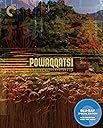
![The Qatsi Trilogy (The Criterion Collection) [Koyaanisqatsi / Powaqqatsi / Naqoyqatsi]](https://m.media-amazon.com/images/I/81Yp8cOqWFL._AC_SL3840_.jpg)






Buy anything from 5,000+ international stores. One checkout price. No surprise fees. Join 2M+ shoppers on Desertcart.
Desertcart purchases this item on your behalf and handles shipping, customs, and support to Burundi.
A singular artist and activist, Godfrey Reggio is best known for the galvanizing films of The Qatsi Trilogy. Astonishingly photographed, and featuring unforgettable, cascading scores by Philip Glass, these are immersive sensory experiences that meditate on the havoc humankind’s obsession with technological advancement has wreaked on our world. From 1983’s Koyaanisqatsi to 1988’s Powaqqatsi to 2002’s Naqoyqatsi, Reggio takes us on a journey from the ancient to the contemporary, from nature to industry, exploring life out of balance, in transformation, and as war, all the while keeping our eyes wide with wonder.DIRECTOR-APPROVED THREE-BLU-RAY SPECIAL EDITION FEATURESNew, restored digital transfers of all three films, approved by director Godfrey Reggio, with 5.1 DTS-HD Master Audio soundtracksEssence of Life, an interview program with Reggio and composer Philip Glass on KoyaanisqatsiNew interview with cinematographer Ron Fricke about KoyaanisqatsiTelevision spots and a new interview with Reggio relating to his 1970s multimedia privacy campaign in New MexicoEarly forty-minute demo version of Koyaanisqatsi with a partial scratch soundtrack featuring poet Allen Ginsberg, along with a new introduction by ReggioNew interview with Reggio about Koyaanisqatsi’s original visual concept, with behind-the-scenes footageImpact of Progress, an interview program with Reggio and Glass on their collaborationInspiration and Ideas, a new interview with Reggio about his greatest influences and teachersPublic television interview with Reggio from 1989 about the trilogyAnima Mundi (1992), Reggio’s twenty-eight-minute montage of footage of over seventy animal species, scored by GlassNew video afterword by Reggio on the trilogyThe Making of “Naqoyqatsi,” a brief documentary featuring interviews with the production crewPanel discussion on Naqoyqatsi from 2003, with Reggio, Glass, editor Jon Kane, and music critic John RockwellInterview with Glass and cellist Yo-Yo MaTrailersPLUS: A booklet featuring new essays by film scholar Scott MacDonald, Rockwell, and author and environmentalist Bill McKibbenKOYAANISQATSIAn unconventional work in every way, Godfrey Reggio’s Koyaanisqatsi was nevertheless a sensation when it was released in 1983. This first work of The Qatsi Trilogy wordlessly surveys the rapidly changing environments of the Northern Hemisphere, in an astonishing collage created by the director, cinematographer Ron Fricke, and composer Philip Glass. It shuttles viewers from one jaw-dropping vision to the next, moving from images of untouched nature to others depicting human beings’ increasing dependence on technology Koyaanisqatsi’s heterodox methods (including hypnotic time-lapse photography) make it a look at our world from a truly unique angle.POWAQQATSIFive years after Godfrey Reggio stunned audiences with Koyaanisqatsi, he again joined forces with composer Philip Glass and other collaborators for a second chapter. Here, Reggio turns his sights on third-world nations in the Southern Hemisphere. Forgoing the sped-up aesthetic of the first film, Powaqqatsi employs a meditative slow motion in order to reveal the beauty of the traditional ways of life in those parts of the planet, and to show how cultures there are being eroded as their environments are taken over by industry. This is the most intensely spiritual segment of Reggio’s philosophical and visually remarkable Qatsi Trilogy.NAQOYQATSIGodfrey Reggio takes on the digital revolution in the final chapter of his Qatsi Trilogy. Through a variety of cinematic techniques, including slow motion, time-lapse, computer- generated imagery, and found footage, the film tells of a world that has completed the transition from the natural to the artificial. Globalization has been accomplished, all of our interactions are technologically mediated, and all images are manipulated. From this (virtual) reality, Reggio sculpts a frenetic yet ruminative portrait of an era in which the cacophony of “communication” has rendered humankind effectively postlanguage. Review: The Best Trilogy On (or about) Earth - This is obviously not a review of the Blu-ray set, but a comment on the release of this amazing trilogy. I have been waiting since the dawn of time (okay, the dawn of blu-rays) for this to be released in this format. And to find out that Criterion will be putting them out leaves me in a state of sheer joy! Three of my favorite films of all time, "The Qatsi Trilogy" is a work of art that virtually nothing else can compare to. A series of gorgeous films, not documentaries (though some have called them this) but moving, living art, that depicts man and Earth's relationship, man and society's relationship, and man and machine's relationship. "Koyaanisqatsi - Life Out of Balance" delves into the beauty of the planet, and man's intrusion upon it. As in all three films, time lapse photography, stunning aerial footage, and some of the most brilliant cinematography you will ever witness (by Ron Fricke, director of Baraka, which is a distillation of this trilogy in my eyes), will keep you in awe and wonder, from first frame to last. Add to that, three lush soundtracks by Phillip Glass (with an amazing performance by Yo-Yo Ma on "Naqoyqatsi") and Godfrey Reggio's stunning vision, captured and created over two decades, and you have a stellar work of art, that is truly incomparable. There is no dialogue in ANY of these films, but an epic tale is told nonetheless. "Powaqatsi - Life in Transformation" reaches back to ancient civilization and on into the present, questioning everything we refer to as "progress." What is the price we pay for "advancement," and how do we (and the planet) lose out by the steps we take to move forward? "Naqoyqatsi - Life as War" brings us into the computer age, where technology, war, and the threat of war, is infused into every aspect of our lives. It makes a point of revealing how we have learned, and accepted, to rely on machinery to run our lives and often run amok. While I haven't had three decades to delve into this film, as I have "Koyaaniqatsi," I am sure that there is so much more for me to learn, and decipher, from this amazing piece of work. Though still managing to be stunningly beautiful, I have found this the hardest of the trilogy to watch, the sense of doom and devastation being palpable throughout. I hope this helps those wondering what "The Qatsi trilogy" is, and I cannot recommend any films more than I can these. I am a photographer, and I KNOW that these films have guided me, and helped create my artistic vision more than anything else in my life. I believe that anyone that loves film, anyone that feels the loss humanity has experienced as we move further away from a society based upon nature and "being at one" with the planet, and anyone that does not need dialogue to have a story told to you, will adore these films as much as I have. Do not hesitate to make this trilogy a part of your collection, you cannot go wrong when a masterpiece is being offered to you. Review: Transcends Cinema - The great spiritual meditation on the world, civilization,and what it means to be human. Inexhaustible, as all great works are. Criterion has done it again: the most recent is 23 years old but plays like it was filmed yesterday. Music is even more electrifying. Currently discounted on desertcart, worth every penny!
| ASIN | B009D004MC |
| Aspect Ratio | 1.77:1 |
| Audio Description: | English |
| Best Sellers Rank | #13,379 in Movies & TV ( See Top 100 in Movies & TV ) #20 in Special Interests (Movies & TV) #39 in Documentary (Movies & TV) |
| Customer Reviews | 4.7 4.7 out of 5 stars (437) |
| Director | Godfrey Reggio |
| Is Discontinued By Manufacturer | No |
| Item model number | 715515100618 |
| MPAA rating | NR (Not Rated) |
| Media Format | Blu-ray |
| Number of discs | 3 |
| Product Dimensions | 0.7 x 7.5 x 5.4 inches; 10.72 ounces |
| Release date | December 11, 2012 |
| Run time | 4 hours and 34 minutes |
| Studio | Criterion Collection |
| Subtitles: | English, German |
U**J
The Best Trilogy On (or about) Earth
This is obviously not a review of the Blu-ray set, but a comment on the release of this amazing trilogy. I have been waiting since the dawn of time (okay, the dawn of blu-rays) for this to be released in this format. And to find out that Criterion will be putting them out leaves me in a state of sheer joy! Three of my favorite films of all time, "The Qatsi Trilogy" is a work of art that virtually nothing else can compare to. A series of gorgeous films, not documentaries (though some have called them this) but moving, living art, that depicts man and Earth's relationship, man and society's relationship, and man and machine's relationship. "Koyaanisqatsi - Life Out of Balance" delves into the beauty of the planet, and man's intrusion upon it. As in all three films, time lapse photography, stunning aerial footage, and some of the most brilliant cinematography you will ever witness (by Ron Fricke, director of Baraka, which is a distillation of this trilogy in my eyes), will keep you in awe and wonder, from first frame to last. Add to that, three lush soundtracks by Phillip Glass (with an amazing performance by Yo-Yo Ma on "Naqoyqatsi") and Godfrey Reggio's stunning vision, captured and created over two decades, and you have a stellar work of art, that is truly incomparable. There is no dialogue in ANY of these films, but an epic tale is told nonetheless. "Powaqatsi - Life in Transformation" reaches back to ancient civilization and on into the present, questioning everything we refer to as "progress." What is the price we pay for "advancement," and how do we (and the planet) lose out by the steps we take to move forward? "Naqoyqatsi - Life as War" brings us into the computer age, where technology, war, and the threat of war, is infused into every aspect of our lives. It makes a point of revealing how we have learned, and accepted, to rely on machinery to run our lives and often run amok. While I haven't had three decades to delve into this film, as I have "Koyaaniqatsi," I am sure that there is so much more for me to learn, and decipher, from this amazing piece of work. Though still managing to be stunningly beautiful, I have found this the hardest of the trilogy to watch, the sense of doom and devastation being palpable throughout. I hope this helps those wondering what "The Qatsi trilogy" is, and I cannot recommend any films more than I can these. I am a photographer, and I KNOW that these films have guided me, and helped create my artistic vision more than anything else in my life. I believe that anyone that loves film, anyone that feels the loss humanity has experienced as we move further away from a society based upon nature and "being at one" with the planet, and anyone that does not need dialogue to have a story told to you, will adore these films as much as I have. Do not hesitate to make this trilogy a part of your collection, you cannot go wrong when a masterpiece is being offered to you.
M**N
Transcends Cinema
The great spiritual meditation on the world, civilization,and what it means to be human. Inexhaustible, as all great works are. Criterion has done it again: the most recent is 23 years old but plays like it was filmed yesterday. Music is even more electrifying. Currently discounted on Amazon, worth every penny!
G**I
Cant' go wrong with Criterion Collection, but I arrived here not knowing that
To say the least, this review isn't about the Criterion Collection, although I followed many of their releases years ago, and they've produced some amazing releases. I don't write reviews often, so the reason I'm reviewing this is because, it's a movie that not only addresses but actually does something with an under-served vision of the medium of film. There aren't many movies that are wordless and plotless (the 2nd is debatable), but this movie uses all the high quality production resources of a Hollywood movie and manages to accomplish what a blockbuster does: it captures footage of the world like we've not exactly seen it and reflects it like an art. It says more than a movie with dialogue. The images speak for themselves, but if that's not enough, there's a score by Philip Glass in the first two (the director's commentary mentions that their sounds and images are a lot more linked/synced than a simple accompaniment). I'm only reviewing the first two because while I've seen the 3rd one, it's perhaps most difficult to like instantly, because I've not wanted to see it again immediately like the other two(the first two and their bonus features are worth the price of 3- if you want to look at it that way). Another way I see the 3rd film, is that it's intentionally unpleasant. The best way to convey something bad is to make it like Requiem for a Dream or Trainspotting. Portraying an opinion on a subject by suggesting it's undesirable. The fact that I instantly liked the first two suggests that if they're not widely accessible, I am not either (and why I find most mainstream movies inaccessible). This trilogy leaves me with a lot of ideas to want to talk about- it's an experience and not just an idea of course, but it's the realization that one can't exactly live that "other" world that is being eroded as portrayed in Koyaanisqaatsi and Powaqqatsi. I can feel empathy when I see these movies but I tend to get distracted by technology to have an interest in cultural life for a very long time. This trilogy is made by people who not only are aware of life before the 1980s, but are able to portray it as if we were there too. This movie makes me want to understand life before the immortal magician of technology has gotten our attention on a regular, or at least semi-regular basis. Not many movies have done this. At the same time, I'm not someone who watches as many movies as I used to, thus the reason I'm writing this is because it's a breath of fresh air that I've discovered a work of art that uses the medium in an alternative way. I'm unsure how often movies like this get made- surely there is lots of other content that has a different view- this one is grand in many ways. It's my hesitance to want to expose myself to much more after finding something with so much replay value. It provokes, it makes me think. The movies are a meditation on life. At worst, it's better than a screensaver to watch on my computer. At best, it's the reminder of what's missing- it's a guide or a gateway to the world that never was. I wouldn't be surprised if movies like this became more popular, because the format of many trailers today- short clips to entertain us without doing much more, don't go deep like these movies do. They suggest that another way of life is possible, despite all pessimism and naysaying. It only requires a patience- the drumbeat of a movie without dialogue or "plot" will appear absent, but it's there- it's just natural- your own heartbeat. This movie is similar to the art project of Cristian Marclay and his 24hr clock film exhibit. It is a timescape, as is Chronos- but is more focused on themes other than time, without mentioning them- and they're well known, but the great difference is that this movie allows us to feel those themes. Powaqqatsi captures a great glimpse of the developing world, which, if it is to believed, is following the shadow of the industrialized world, yet some are ignorant of it, and are either blissful or foolish or both. It appears the first film is in 35mm while the 2nd is in 70mm, but they are both high quality- better than DVD. I'd agree with another reviewer that Koyaanisqaatsi captures a larger vision- it is about the North (Western culture too that seems), but it does it in a way that is able to reveal a lot about the old way of life, not having to show the "3rd world" but merely by showing us in another light. We look like eusocial ants at times- bustling through train stations and intersections in metropolises and in that way it exposes our primitive ways in a comfortable and sometimes humorous portrayal. The soundtracks are no less than spectacular- I've heard other stuff by Philip Glass, including Satyagraha, so it's a pleasant addition to my impression and perhaps a very selective on at that based on how reluctant I am to seek out other great films when there's a lot more to analyze and think about with these. To emphasize, but not summarize a timescape movie or technique as used in this trilogy offers the viewer a greater vantage about their position in life, and gave me many ideas about the meaning of life. That it's a wide and diverse thing(s), and that it's often changing, and that some things appear very vital yet are fading. It makes me want to not watch another formulaic trailer again, or simply access this way of life enough to feel like I'm not missing out on something human.
E**S
The first 2 are awesome.
Powaqqatsi is spectular! I've had the soundtrack on CD for years. The film and music go so well togther. The first in the series is good as well but the last in the series is somewhat confusing because it doesn't follow the theme. Anyway, still worth purchasing.
F**D
So what is Koyaanisqatsi? It’s not really a movie per se. It’s an experience. A silent documentary showing our evolution. Our footprints. Our destruction. The film was originally released a long time ago by IRE. If you made the proper donation, you would receive the movie by mail — with a very different aspect ratio. Which, by the way, is far superior to this version. For a long time, the movie remained obscure material reserved for initiates. And even if it’s been available on DVD and Blu-ray for quite a while now… it’s still a niche product. Alright then, what is it exactly? It’s transcendence. A truly unforgettable soundtrack, combined with visuals and audio that show the insignificance — and the destruction — of our existence. I have no idea how to explain it. But one thing is certain: you should watch it. And since the IRE edition is long gone, this Blu-ray is the best way to do so. 7 stars out of 5.
N**S
Be careful if you buy this product outside of the USA. This product is for Region A (USA, Canada, etc.) You will not be able to play these discs if you live in Europe or any other region outside of Region A.
L**I
Viene venduto come “Edizione: Germania”, in realtà è a uso esclusivo del mercato americano, ergo: con un lettore bluray europeo non si può vedere. Inutile.
S**S
I've waited AGES to see the Qatsi movies in high definition and I can say that my expectation was fulfilled big time. In a big screen HD TV you can notice some artifacts (in the vanishing smoke scenes, for example) but I don't think it'll be possible to enhance the original images a lot more than this. As the last movie (Naqoyqatsi) has a lot of CGI graphics I had the impression that it upscaled better than the other two. Anyway, I'm very satisfied with the bluray image and with the amazon UK marketplace service. Sorry for my English, though.
A**ー
映像、音楽、全てが美しい 買ってよかったぁ
Trustpilot
1 month ago
2 months ago